Indigenous Youth Leadership Camp
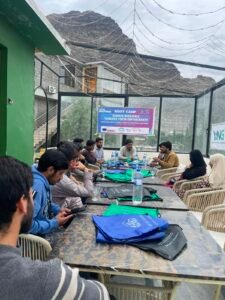
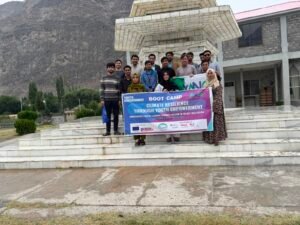
The Indigenous Youth Leadership Camp was at the core of YANG’s project “Climate Resilience through Youth Empowerment,” implemented between April and November 2026 with support from Global Youth Mobilization. Its purpose was simple but powerful: to give young people in Gilgit-Baltistan the tools, confidence, and leadership to face the growing climate risks in their communities.
Gilgit-Baltistan is one of Pakistan’s most climate-vulnerable regions. Floods, landslides, water insecurity, glacier-related risks, soil erosion, and even displacement are becoming part of everyday life. For remote mountain communities, these disasters are especially devastating because access to emergency services, infrastructure, and resources is limited. This project was born from that reality — the belief that communities should not only respond to disasters but also have the knowledge and leadership to reduce risks before they strike. And at the heart of this vision were young people.
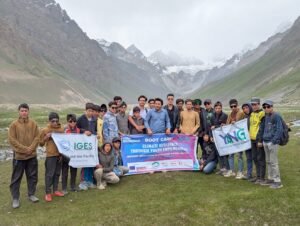
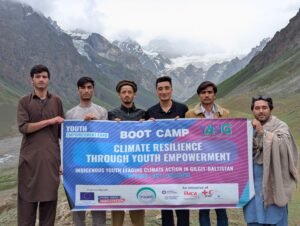
Through the camp and community activities, YANG engaged and trained more than 300 youth from different villages. They learned about climate change, disaster preparedness, resilience, sustainable development, and practical local action. But more importantly, they were encouraged to look at climate change through the lens of their own communities: Which areas are vulnerable to floods? How can families prepare for emergencies? What local knowledge and resources can strengthen resilience? This approach transformed young people from passive recipients of information into active leaders and mobilizers.
The project also worked directly with communities to build resilience. Young participants shared their learning with families and schools, multiplying the impact far beyond the camp itself. A small climate emergency guide was developed in the local language to make preparedness information accessible to everyone. Community mapping helped identify flood-prone areas and safer evacuation routes, turning awareness into practical preparedness.
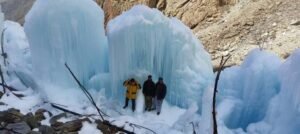
Indigenous knowledge was central to the project. One highlight was the ICE TOPA artificial glacier initiative, a low-cost experiment using local materials and traditional knowledge to address water security in high-altitude areas. For communities where water depends on glaciers and seasonal melt, this kind of locally led adaptation is vital.
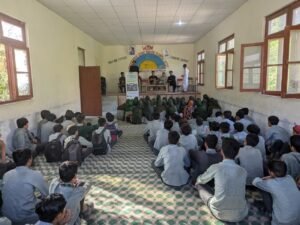
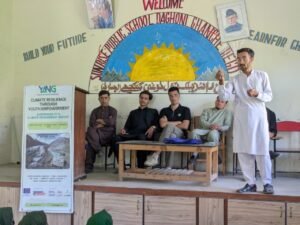
Schools were another focus. Climate education activities encouraged students to see themselves as messengers of change, carrying awareness into their families and communities. Tree-planting drives connected resilience with ecosystem restoration, helping conserve soil and protect against erosion while giving young people a chance to take visible, practical action.
Most importantly, the camp was youth-led. Young people were involved in design, implementation, mobilization, and decision-making. They weren’t treated as beneficiaries — they were leaders. This mattered especially in Indigenous and remote mountain communities, where youth hold valuable local knowledge and understand the realities of their environment firsthand.
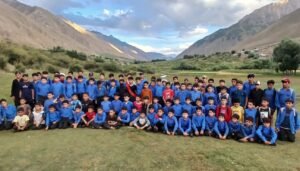
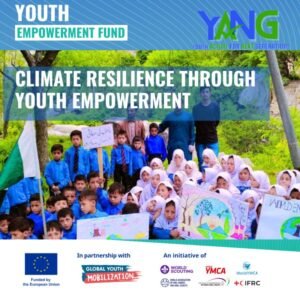
By the end of the project, YANG had mobilized and trained over 300 youth, developed a climate emergency guide, promoted practical adaptation through ICE TOPA, mapped flood-prone areas, strengthened climate education in schools, and carried out tree-planting and awareness activities. The initiative built a network of young leaders capable of continuing climate advocacy and action beyond the project period.
The project’s completion in November 2026 was a milestone, but not an end. YANG is committed to supporting this network of youth leaders and expanding their work. The camp showed that climate resilience is not only about infrastructure or emergency response — it is about people, knowledge, leadership, and community ownership. By investing in Indigenous youth, the project created communities that are better informed, better prepared, and more capable of responding to climate risks.
Looking forward, the Indigenous Youth Leadership Camp reflects YANG’s broader commitment: ensuring that young people from mountain communities are not just represented in climate conversations but are empowered to lead solutions. From workshops and education to ecosystem restoration and disaster preparedness, the camp strengthened the confidence and capacity of more than 300 youth to become leaders of climate action.
For YANG, the future of climate resilience in mountain regions must be locally led, youth-driven, and grounded in Indigenous knowledge. Climate-vulnerable communities should not only be spoken about — they should be empowered to lead the way.